WISH YOU WERE HERE

Back of Beyond Touring, Camping & Glamping Park

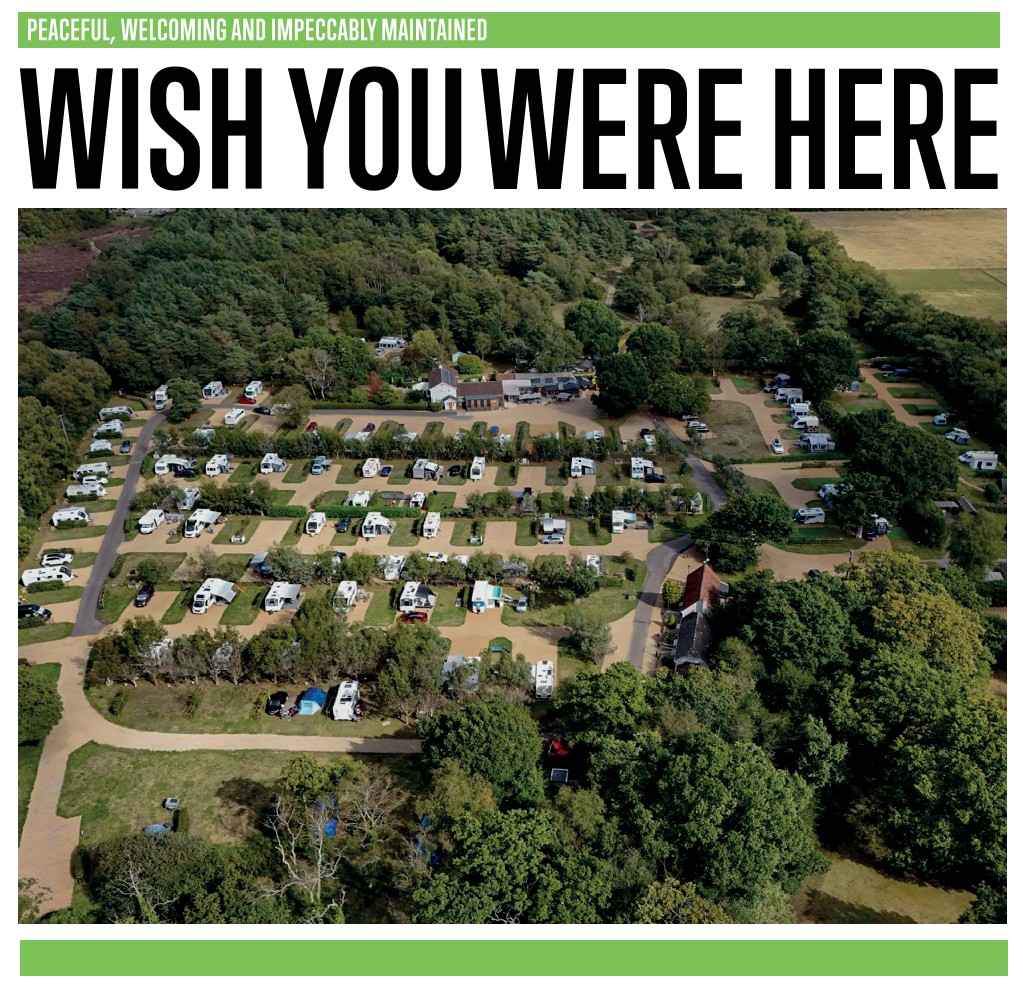
Back of Beyond Touring, Camping & Glamping Park in St Leonards, Dorset, is a beautifully run adults-only retreat that blends peaceful woodland surroundings with excellent facilities and warm, attentive management.

Run by Martin and Victoria Bowrey since 2013, the 30-acre, five-star park has grown a loyal following for its calm atmosphere, spacious layout and thoughtful touches that make every visit feel restorative. The park offers 98 well-maintained pitches, ranging from fully serviced options to astroturf and non-electric pitches, ensuring that both touring guests and traditional campers are well catered for.

Those seeking something a little different can choose from cosy glamping pods, huts or even a yurt, all nestled among the woodland, lakes and heathland that define the site’s character. Facilities are excellent: two modern amenities blocks provide clean toilets and showers, while Monty’s Bar and a rotation of visiting caterers create a friendly social hub in the evenings.

Guests also benefit from on-site Wi-Fi, a handy shop stocked with essentials and locally sourced treats, and a dog wash—perfect after exploring the park’s extensive woodland. Nature lovers will particularly appreciate the dedicated wildlife lakes, part of a designated Site of Special Scientific Interest, and the 18 acres of off-lead dog-walking woodland.

There’s even a rustic pitch-and-putt golf course for relaxed afternoons outdoors. The team’s commitment to sustainability is evident through their recycling efforts, support for local producers and on-site beehives, whose honey is sold in the park shop—a charming and delicious reminder of their eco-friendly ethos. Location is another major draw.

Just three miles from Ringwood, the park is well placed for exploring Moors Valley Country Park, Avon Valley Country Park, the New Forest National Park and the sandy beaches of Bournemouth. It’s easy to see why Back of Beyond has earned recognition including Dorset Tourism Awards for both Best Campsite and Dog Friendly Business, plus a place among the Top 100 Sites and Adult-Only winner for 2025.

Peaceful, welcoming and impeccably maintained, Back of Beyond offers the perfect escape for adults seeking tranquillity, nature and a touch of comfort in one of Dorset’s most scenic corners.

Back of Beyond Touring, Camping & Glamping Park
St Leonards,
Dorset
01202 876968
info@backofbeyondtouringpark.co.uk
www.backofbeyondtouringpark.co.uk

AWAY RESORTS

Redefining the UK Holiday Park Experience...

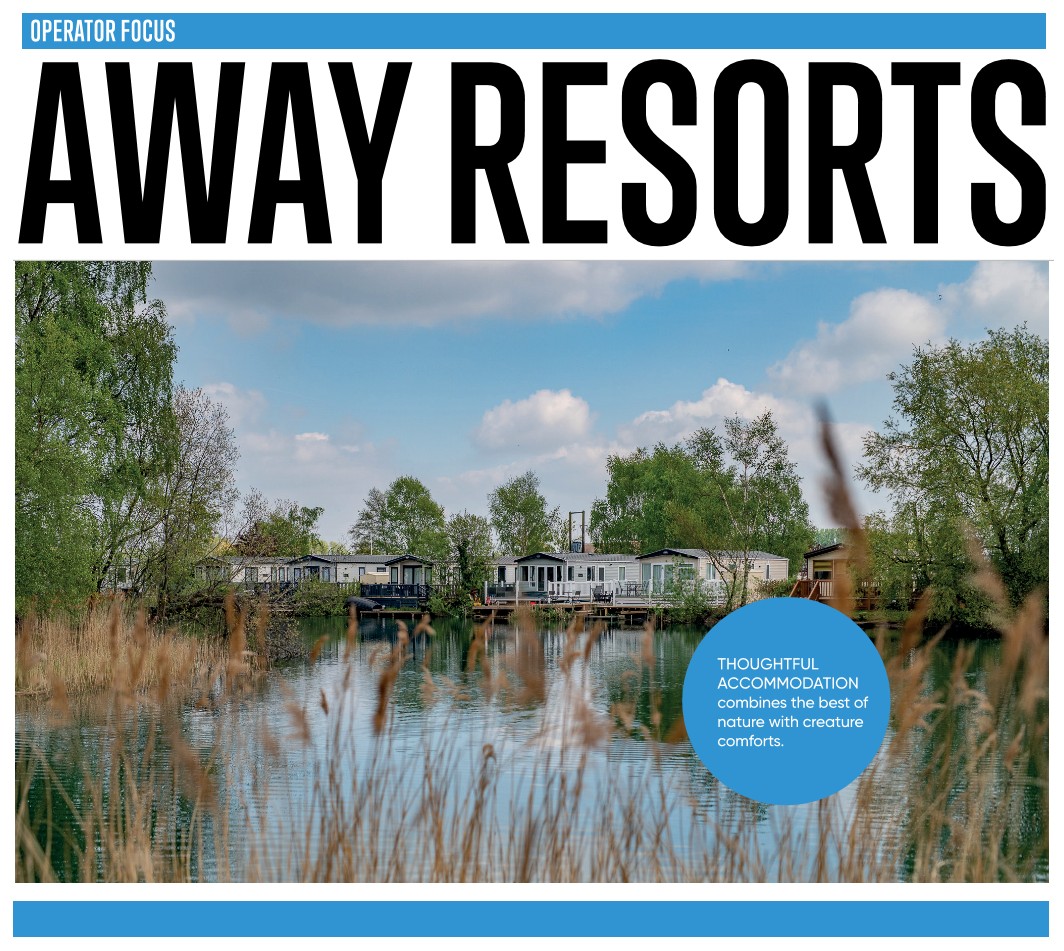
In an era when the staycation has become not just a necessity but a lifestyle choice for millions, few operators have done more to reimagine the British holiday park than Away Resorts.

With a fast-growing portfolio of twenty-five locations stretching from Scotland to Cornwall, the brand has become synonymous with creativity, innovation, and a spirit of difference that sets it apart from the competition.

From quirky themed accommodation and digital innovation to sustainability initiatives and an ethos grounded in care, Away Resorts is positioning itself not just as a provider of holidays, but as a disruptor changing the way the UK thinks about leisure breaks.

STANDING OUT IN A COMPETITIVE MARKET
What makes Away Resorts unique? In a crowded sector, the company has developed a reputation for “discover different,” their core brand ethos.

Rather than simply replicating the tried-and-tested caravan or lodge model, Away Resorts has created a portfolio of imaginative accommodation options that delight guests and surprise even seasoned holidaymakers.

From luxury lodges with hot tubs to glamping tents and classic chalets, there’s a style to suit every budget and taste. Standout offerings include Rockstar-themed accommodation with retro touches adding a playful, immersive experience that goes beyond the ordinary.

This sense of creativity and character has become a hallmark of the operator, proving that innovation and fun are as important as convenience in attracting today’s holidaymakers.

ADVENTURE PLAYGROUNDS, POOLS, and activities keep all ages entertained.

VALUES THAT INSPIRE
The company’s vision is simple yet powerful: “to inspire everyone to holiday in the UK.” This vision is underpinned by Away Resorts’ guiding values of being Amazing, Attentive, and Lovers – principles that are woven through every aspect of their parks.

• Amazing: Constantly surprising and delighting guests with new experiences, from themed breaks to exciting park entertainment.
• Attentive: Ensuring the details matter – whether through responsive customer service or well-maintained facilities.
• Lovers: A passionate commitment to their people, customers, and the environment.
• This values-led culture has allowed the operator to foster strong loyalty, not only among guests but also among its workforce of 1,000+ employees.

LUXURY LODGES WITH A TWIST, from hot tubs to themed décor, accommodation is designed to delight.

A DIGITAL-FIRST APPROACH
Holiday parks are no longer places where guests expect to switch off completely from technology. Instead, visitors increasingly demand digital convenience at every stage of their journey – and Away Resorts has risen to the challenge.

More than 65% of bookings are now made online, reflecting the brand’s commitment to ensuring the booking process is as seamless as possible. Significant investment has also been channelled into the Away Resorts App, designed to give holidaymakers real-time access to everything they need during their stay.

From booking activities and checking entertainment schedules to ordering food and drink, the app serves as a digital concierge in your pocket.

AWAY RESORTS’ imaginative approach keeps visitors coming back year after year.

SUSTAINABILITY IN ACTION
Modern holidaymakers are increasingly conscious of sustainability, and Away Resorts has taken proactive steps to reduce its environmental footprint.

Initiatives across all parks include:
• Recycling bins and bags provided in every accommodation unit.
• Plastic-free drives, reducing single-use plastics across food outlets and retail areas.
• Broader commitments to energy efficiency and eco-friendly operations (more details can be found at awayresorts.co.uk/about/sustainability).

By embedding sustainability into everyday operations, Away Resorts is not only meeting guest expectations but also aligning with long-term environmental goals that benefit communities across the UK.

THE UK HOLIDAY MARKET TODAY
The rise of the staycation has been one of the defining travel trends of recent years, and Away Resorts has been at the forefront of this surge. The UK holiday market has seen excellent volume growth, with bookings up by 12%, reflecting an appetite for breaks closer to home.

Interestingly, the company notes that last-minute bookings are arriving later than ever, a sign of the changing behaviour of today’s consumers. Flexibility and the ability to respond quickly to demand are crucial, and Away Resorts’ diverse accommodation portfolio and tech-driven booking systems place it in a strong position to capitalise on these shifts.

LEADING THE WAY – With innovation, values, and a playful spirit, Away Resorts is shaping the future of UK staycations.

AMBITIONS FOR THE FUTURE
Looking ahead, Away Resorts remains committed to its role as a disruptor in the UK holiday park sector. The company’s short and long-term goal is clear: to continue innovating and delivering amazing experiences for customers and owners alike.

From a single holiday park business to one of the UK’s fastest-growing operators, Away Resorts has carved out a distinctive space in the market. With twenty-five parks nationwide, a clear ethos of “discover different,” and a passion for pushing boundaries, it is redefining what the British holiday park can be.

By blending imaginative accommodation, sustainability, and digital innovation with strong values and attentive service, Away Resorts isn’t just offering a place to stay – it’s creating experiences that guests can’t wait to repeat. And with the staycation trend showing no signs of slowing down, the future looks bright for this bold and imaginative operator.

Away Resorts
0330 053 7000
www.awayresorts.co.uk

PREMIUM SUSTAINABLE GUEST TRANSPORT FOR MODERN HOLIDAY PARKS

Holiday park operators know that first impressions matter – and when it comes to moving guests in comfort and style, it doesn’t get better than the Toro Vista. Vista is Toro’s new all-electric passenger vehicle, designed with the modern leisure sector in mind.

Whether for transporting people across large resorts or connecting different facilities, the Vista range offers a premium experience that will impress guests and reflect well on your business. Smooth, electric and eco-friendly At the heart of the Vista are two HyperCell lithium-ion batteries, with the option of an additional third to ensure all-day dependability.

This advanced technology delivers all the benefits of electric power – less noise and vibration, zero emissions and simplified maintenance – with the industry-leading reliability that Toro is known for. For operators, that means fewer disruptions and reduced running costs, while guests can enjoy a smoother, quieter and environmentally responsible ride.

A beautiful, customisable design Vista combines elegant lines with a sleek finish, creating a people carrier that fits perfectly in any holiday park looking to stand out. The durable TPO plastic body can be painted, wrapped or customised with decals, allowing operators to easily add their logos, strengthen their brands and elevate the look of their fleet.

Built for comfort, resilience and versatility Available in four, six or eight-passenger models, the Vista is adaptable to a wide range of needs. Its sleek design and sturdy build quality make it a durable long-term investment that enhances both operational efficiency and guest satisfaction. And what’s best, the Vista is also a joy to use.

Independent suspension, generous legroom and ergonomic seating ensure every journey is smooth and comfortable for both guests and drivers. Practical touches – from ample storage to an electronically controlled parking brake that engages automatically – add to its ease of use.

Superior guest experience The Vista is already making an impression at one of the world’s most prestigious golf clubs. At Royal Portrush, specially branded Vista vehicles are now in use transporting members and guests between the course and the club’s luxury accommodation, The Rosses.

According to the team, the vehicles not only look brilliant but have significantly improved the overall guest experience. See the Toro Vista in action Want to know more? Holiday park and resort operators will have the chance to see Vista first-hand at the Holiday Park & Resort Innovation Show on 5–6 November at the Reesink UK stand HP 810.

Reesink Turfcare
01480 226 800
www.reesinkturfcare.co.uk

MINISTER VISITS DRUMMOHR CAMPING & GLAMPING

Scotland’s Tourism Minister Richard Lochhead visited Drummohr Camping and Glamping Site in East Lothian last Autumn, celebrating its success as a leader in quality and sustainability within the tourism industry.

Drummohr, located on the Firth of Forth near Edinburgh, was recently named UK Campsite of the Year by Camping magazine and Best Park in Scotland by Pitchup.com. Minister Lochhead toured the 11-acre park, known for its eco-friendly practices and top-tier accommodations, including luxury lodges, glamping pods, and en suite bothies.

Site Manager Angie Purves showcased initiatives such as solar energy generation, EV charging points, and support for local transport links. Biodiversity projects include wildflower gardens, bug hotels, and native flora protection, making the park a haven for wildlife.

During the visit, the Minister planted a cherry blossom tree to commemorate the park’s AA five-star award and honoured a long-standing seasonal guest who recently passed away. Lochhead also met staff, including site wardens and the gardener, who contribute to the park’s environmental goals.

The Minister praised Drummohr’s commitment to sustainability and its role in boosting Scotland’s economy. “Businesses like Drummohr are crucial to Scotland’s high-value tourism sector, contributing to a thriving, sustainable future,” he said.

Angie Purves highlighted the park’s community impact, from supporting local businesses to sourcing products from nearby suppliers. Drummohr, part of the WCF employee-owned group, employs 13 staff and continues to invest in guest satisfaction and sustainability.

Drummohr Camping & Glamping Site
01316 656867
www.drummohr.co.uk

AA REVEALS TOP UK STAYCATION SPOTS FOR 2025…

As UK travel trends continue to favour local and sustainable tourism, the annual AA Caravan & Camping Awards have announced the top outdoor accommodation spots for the 2024-25 season.

This year’s winners offer the best of scenic retreats and luxurious glamping, with a new Sustainable Park award showing a growing preference for eco-friendly and unique staycations among UK travellers. The awards celebrated 12 exceptional sites across the country, selected by the AA’s expert inspectors for their outstanding quality and commitment to customer satisfaction.

Categories included AA Glamping Site of the Year, AA Campsite of the Year, and AA Most Improved Campsite of the Year. This year’s winners span the UK, from the rich history and sweeping views from the Isle of Anglesey in Wales to the stunning ancient woodlands nestled within the South Downs of West Sussex.

Hosting the awards, Simon Numphud, Managing Director at AA Media, said, “As local travel continues to grow and sustainable tourism gains momentum, we are excited to announce the best camping and caravanning destinations for the upcoming year.

This year’s winners have demonstrated outstanding quality along with a strong dedication to eco-friendly practices and customer satisfaction, making them excellent options for UK travellers.” All winners of the awards feature in the 57th edition of the AA Caravan & Camping Guide, which is £14.99 and available to buy in bookshops now.

Congratulations to all 2024-25 winners, the full list of this year’s AA Caravan and Camping Awards winners can also be found on RatedTrips.com.

Rated Trips by AA Media
The UK’s top campsites and caravan parks for 2025 | AA RatedTrips.com

PAWS AND RELAX

A guide on how to boost your bookings through dog-friendly holidays...

As pet ownership in the UK continues to rise, the demand for dog-friendly holiday destinations has surged. For managers and owners of holiday parks, caravan parks, campsites, and glamp sites, catering to this growing demographic presents a significant opportunity to enhance guest satisfaction and boost bookings.

Here’s how you can transform your holiday park into a haven for dog lovers. The UK boasts one of the highest rates of pet ownership in the world, with around 31% of households owning a dog.

For many of these owners, their furry friends are part of the family, and leaving them behind during holidays is not an option. By offering dog-friendly facilities and services, holiday parks can attract this substantial market segment, ensuring higher occupancy rates and increased revenue.

*ACCOMMODATION OPTIONS*
Ensure that your accommodations are suitable for dogs. This includes durable, easy-to-clean flooring, secure outdoor areas, and ample space for dogs to move around. Providing a welcome pack with essentials like dog bowls, waste bags, and a list of local vet services can enhance the experience.

*SAFE AND SECURE SPACES*
Designated dog exercise areas are essential. These should be securely fenced, allowing dogs to play off-lead safely. Adding agility equipment can make these areas more engaging. Clearly marked dog-friendly walking routes within or near the park can also be a major draw.

*ON-SITE AMENITIES*
Consider adding dog washing stations for guests to clean their pets after a day of adventures. Dog-friendly dining options, such as cafes or pubs where pets are welcome, can also significantly enhance the guest experience. Offering pet sitting or dog walking services can provide added convenience for guests who may need some time without their pets.

*RULES AND REGULATIONS*
Clearly communicate your park’s pet policies. This includes leash rules, areas where dogs are allowed, and waste disposal protocols. Providing plenty of waste bins and biodegradable bags around the park can help maintain cleanliness.

EFFECTIVE MARKETING can help ensure that dog owners are aware of your pet-friendly facilities.

*MARKETING YOUR DOG-FRIENDLY FEATURES*
Effective marketing can help ensure that dog owners are aware of your pet-friendly facilities. Highlight your dog-friendly amenities on your website, in brochures, and across social media platforms. Collaborate with pet-related businesses, such as local pet shops or grooming salons, to create cross-promotional opportunities. Encouraging guests to share their experiences on social media, using specific hashtags, can also help build a community of pet-loving travellers and enhance your park’s reputation.

*PARTNERING WITH LOCAL ATTRACTIONS*
The surrounding area can greatly influence the attractiveness of your holiday park. Partnering with local dog-friendly attractions, such as parks, beaches, and walking trails, can enhance your appeal. Providing information about these attractions, including maps and guides, can help guests plan their activities.

*EVENTS AND ACTIVITIES*
Hosting dog-centric events can create a unique selling point for your park. Consider organising events like dog shows, agility competitions, or pet-friendly festivals. These events can attract visitors, provide entertainment, and foster a sense of community among guests.


It’s important to ensure that your staff is knowledgeable about all dog-friendly policies and amenities. Training sessions on how to handle common issues, such as barking or stray dogs, can improve the overall experience for guests. Staff who are comfortable and friendly around dogs can also enhance guest satisfaction.

Maintaining a healthy and sustainable environment is essential for the wellbeing of all guests, including dogs. Use eco-friendly cleaning products and ensure that waste disposal systems are in place to manage pet waste effectively. Regularly inspect and maintain dog-friendly facilities to ensure they are safe and hygienic.

Looking at successful examples can provide inspiration and practical insights. Parks like Trevornick Holiday Park in Cornwall have effectively integrated dog-friendly features and reported increased bookings and guest satisfaction as a result. White Cross Bay in the Lake District are offering dog-friendly lodges with enclosed decking areas, dog exercise fields, and even a dedicated dog shower facility.

DOGS AND THEIR OWNERS are big business which is why thousands of holiday destinations are offering pooch-friendly stays.

White Cross Bay Trevornick Holiday Park has gone a step further by offering dog-friendly beaches, dedicated dog walking fields, and a dog agility course. Both parks highlight their pet-friendly features prominently in their marketing materials, attracting dog owners from across the UK.

Transforming your site into a dog-friendly destination can set you apart from competitors and open up a substantial market of dog-owning holidaymakers. By creating a welcoming environment for pets, offering tailored amenities, and effectively marketing your dog-friendly features, you can enhance guest satisfaction and loyalty, ensuring a successful and prosperous operation.

As the trend for pet-inclusive holidays continues to grow, now is the perfect time to embrace the opportunity and make your holiday park a favourite destination for dog lovers across the UK.


TOP OF CLASS FOR HOLIDAY MASCOT

TOP OF CLASS FOR HOLIDAY MASCOT

PARK HOLIDAYS UK mascot Loopy spread the word about the importance of recycling on a visit to an East Sussex primary school.

Pupils at an East Sussex primary school are learning that recycling with the help of hanks to Park Holidays UK mascot, Loopy. The major holiday parks group has teamed up with Robsack Wood Primary Academy in St Leonards on Sea to help youngsters understand the importance of reducing waste.

Children who come top of the class by showing a commitment to recycling are being presented with a cuddly Loopy rabbit, the eco-friendly mascot of Park Holidays UK. The toys were donated to the school by the company which has its head office in nearby Bexhill-on-Sea from where it operates 40-plus holiday parks throughout the UK.

The donation was the brainchild of Louise Evans who works as a holiday sales support manager at the group, and whose two children attend the 420-pupils school. Louise is also co-chair of the academy’s board of governors, and said she knew how much importance the school attaches to raising environmental awareness.

She persuaded her bosses to make a gift of the 75 rabbits to Robsack Wood and spoke to pupils in two school assemblies about how essential recycling was to the future of our planet.

CHANGING PLACES

CHANGING PLACES

Even the humblest washroom facilities can make or break your brand, advises Becci Knowles...

ADD A TOUCH of character to your washroom facilities to keep the guests happy.

Leading market research firm Mintel says that in a competitive market, with relatively low brand differentiation outside of the leading holiday centre brands, catering for rising visitor expectations in terms of accommodation, facilities and experiences has become vital for success. Clean, modern, accessible, and eco-friendly washrooms have a key role to play in continuing this upward trend.

A quick look at holiday park reviews online at Tripadvisor is testimony to the fact that these facilities feature highly on the list of customer priorities across every demographic. Meeting the rising expectations of existing customers and changing the perception new ones, is vital for a destination’s growth. Park Holidays operates 43 caravan holiday parks across the UK from Cornwall in the West, Suffolk in the East and up to Yorkshire and Scotland in the North.

Commenting on the importance of its washroom facilities across the portfolio, a spokesperson told Holiday Park Scene: “On our parks which provide touring and camping pitches, the washrooms remain one of the single most important factors in shaping guests’ level of satisfaction with their stay.

“On review websites, our facilities will frequently be commended for their cleanliness, standards of maintenance, and overall impression of being a welcoming and hygienic environment for ablutions. “Positive comments on our washrooms also appear on Park Holidays’ Feefo review website and have helped the group achieve the platform’s excellence award for six years in succession.”

SUCCESS MARKERS
Washrooms are pivotal in the success of smaller parks too, particularly where there is a spa element Kevin Jones, resort director at Whalesborough Farm and cottages tells Holiday Park Scene. “Being a health spa and 5* cottages resort, cleanliness and the experience is vital to our business, we pride ourselves on giving the customer the best possible experience they can have while with us,” says Kevin.

He continues: “Businesses are judged by the cleanliness of the facilities and predominantly the washroom facilities, we want our customers to enjoy their time with and a clean, pleasurable place to be starts with the washrooms.” Shaun Matthews is the owner of Blue Hills Touring Park in Truro. He agrees that good quality, clean facilities help to present a professional image of your park.

“Many smaller caravan and camping sites such as our 50 pitches often don’t provide some of the other facilities that are found on larger parks so it essential that those we do provide are as good as they can be. They will be one of the main facilities that a park is judged upon. “The main requirement that guests are looking for, regardless of shape/ size washroom facility that’s provided is cleanliness, this seems to be the number one priority and is never going to change.

“Washroom facilities have been moving more and more “posh”, underfloor heating, heated and backlit mirrors, background music. In some case there has been a move to provide facilities that are more akin to a hotel, although this is still the preserve of the much higher end parks.”

AS DERBYSHIRE’S NEWHAVEN HOLIDAY PARK SHOWS, thoughtful design can make all the difference to washroom appeal Pic. Park Holidays UK

LOCATION, LOCATION
Emma Bateman is the site manager of Lincolnshire based holiday park, Westwood Lakes. Specialising in fishing holidays, it has seven lakes open to guests and the public. As fishing is an outdoor sport, and the lakes are sometimes a distance from the main buildings, the park has built its own toilet facilities around the lakes, which staff clean daily. The company also hires portaloos, via an external provider, for the lakes that cannot be reached by the water and drainage system.

Emma says: “Over the 16 years we have been operating, we have tried to update our facilities as we see fit. For example, the outdoor permanent toilet blocks are a recent addition to the site after fisherman complained the café and bar toilets were too far away from the lakes. “In addition, we have recently updated our hand driers to the Dyson air model, and we find they are much more efficient at drying hands and that means less paper is used too.”

Onsite facilities include both a café and bar with washroom facilities, including disabled toilets and baby changing units. Emma adds: “Having these extra facilities means we can accommodate all visitors; inclusion is important to us at Westwood Lakes, and this is reflected in our facilities having ramp access etc, to improve visitor experience.” Mayfield Park is a family-owned and run camping, caravan and residential park nestled in the hills on the outskirts of the famous market town of Cirencester.

Picking up on Emma’s point about access and inclusion, managing director Carl Upton agrees that the location of your washrooms, is key: “When planning on new toilet blocks it’s always good to keep them near the camp site and not miles away or in a muddy field and to have easy access for disabled users,” he says. Had the team at Westwood Lakes foreseen just how much how much the park would grow in the 16 years since its inception, Emma says they would have planned their washroom facilities differently: “For example, the outdoor permanent toilet blocks would have been built much earlier and we would have used part of the accommodation plumbing and drainage systems to be able to reach the further afield lakes instead of portaloos, which is an extra monthly expense.”

“Washroom location is everything,” says Blue Hills Touring Park’s Shaun Matthews. “So not too far from the furthest pitches but equally close enough to services to reduce installation costs.” He also points to ease of operation. “Are they user friendly, can some facilities remain open whilst others are closed for cleaning,” Sean asks. “Don’t underestimate the number of cubicles/ showers required, make sure that guests are well catered for and won’t have to queue for their morning shower. “Accessible and family bathroom facilities should also be provided. Can you integrate other facilities into the same building, for example, wash up areas.”

WITH THEIR HIGH VOLUME OF USERS, washrooms at Chichester Lakeside Holiday Park are scheduled for regular monitoring visits throughout the day. Pic. Park Holidays UK

ECO ESSENTIALS
Back at Whalesborough Farm and Cottages, resort director Kevin is keen to stress the importance of sustainability: “Parks should always consider sustainability, from thinking how we heat our washrooms to the water we use in them,” he says, adding: “We use water from our own bore hole and air source heating powered by our turbine on site.” Blue Hills Touring Park’s Shaun Matthews suggests using recycled and environmentally friendly cleaning products.

“If you can easily manage the cleaning maintenance through good design then you are part of the way to sustainability. “In addition, sustainability can be achieved through the installation of renewables such solar thermal, air source/ground source heat pumps and so on.” Achieving a more sustainable business model, especially in the current economic climate, remains a challenge for many parks.

Emma again: “We have to think of what is friendly and cost effective; we are becoming more aware of the environmental damage and we can make a difference with better quality hand driers, environmentally friendly toilet rolls and tissues. “Sadly, this doesn’t always equal cost effective, and that is something we are trying to balance here at Westwood Lakes,” she adds.

Looking to the future, Shaun says: “Washrooms will become more upmarket as guests demand a better experience. “Probably more eco-friendly, it’s quite likely that more operators will also move towards unisex facilities. This will help to reduce the number of cubicles required and reduce costs as utility bills continue to grow.” Picking up on this point, Whalesborough’s Kevin Jones says: “Washrooms of the future will be clean, vibrant, multi-generational, filled with cloud-based technologies, a zero emissions bathroom removes the feeling of guilt when using natural resources and energy.

“It will allow us to take a shower several times a day without placing a burden on the environment. “Designed as a small power station, the bathroom functions as a heat recuperator and water treatment facility, for example by converting waste materials into methane which is then used to generate heat.” While the development of washroom technologies continues to gather pace and the exact future of them remains to be seen, what is clear is that parks looking update their existing facilities or install new ones have an ever-widening range of products and services to choose from.

CARRY ON GLAMPING

CARRY ON GLAMPING

Eco-credentials and a unique experience are top of the list when it comes to maintaining that all-important occupancy rate, reports Judith Wojtowicz


PEACE AND TRANQUILLITY in the Malvern Hills, a project developed by The Rural Planning Co


Getting up close and personal with a llama might not be everyone’s idea of a perfect holiday break. But at Glamping with Llamas on the border of Norfolk and Cambridgeshire, it is the ultimate in experiential glamping. The clue is in the name… a herd of ‘off duty’ grazing llamas are well used to visitors walking among them.

At 6pm each day, in the words of Tina Gambell, they are ‘on duty’ as she and husband Chris feed, groom and demonstrate how to handle them, sharing with visitors keen to learn more about these gentle creatures. The couple set up their business after realising their paddock pets had potential to offer a unique visitor experience.

“The difference here is that we encourage our guests to walk among the llamas and interact with them where similar sites seem to keep their animals behind a fence,” said Tina. One of their llamas acted as ring bearer for a summer wedding… a truly immersive and unique experience.


A WOOD-BURNING STOVE at the heart of this well-appointed safari tent is ideal for chilly nights at Meadowfield


SELLING POINTS
“The market is becoming saturated but for sites with a genuine usp, even those who are watching their pennies, will return if they enjoyed a memorable and unique experience,” added Tina, who is developing their wedding offering for the coming year. The word ‘experience’ is cropping up more and more as market growth slows, having seen an explosion of interest during the pandemic as people sought ‘outside’ holiday options.

While some pop-up sites and less-well managed businesses have since vanished, there is still much to choose from, be it a £60 per night cabin with shared shower block or high-end glamour from £200 upwards. In the absence of definitive data, anecdotal evidence seems to indicate glamour alone is no longer enough. Among the fast-growing millennial crowd, priorities include an eco-friendly offering combined with glorious setting and 5-star plus luxury… picture perfect for Instagram.


They want quirky en suite accommodation, think treehouse, geodome, gypsy caravan, stargazer tent, yurt, exotic tipi or converted vintage vehicles, with added value such as spa, wellness activities, nature trails and even the services of a top-class professional chef. Green tourism is a big trend with all ages, as people actively seek a glampsite that embraces sustainability, reducing their carbon footprint and getting close to nature.

One such is Brownscombe Luxury Glamping in Devon whose far-ranging sustainability policy has seen it win the Green Tourism Gold Award three years running. Its commitments include using third-party suppliers who follow similar principles such as the local laundry that has invested in biomass and solar technologies to minimise their impact on the environment, not to mention a water borehole.


SUNRISE: There’s glamping and then there’s Glamping with Llamas.


A fine example of a circular economy designed to reduce waste and protect the environment. Sarah Riley, founder of The Glamping Academy helps would-be hosts around the world to design their dream eco-accommodation. She told us: “Only ten years ago a bell tent in a field was enough of an attraction because it was seen as new and different.

Today, as well as a wonderful location and amazing interiors a successful business needs to maximise the guest experience.” All those things can be found at The Little Shire in Somerset, whimsical hobbit houses built partly underground… fit for hobbits and humans, says Adelle Hobbs, who added glamping to an established commercial operation within a converted dairy farm.

A selection of independent shops and eateries, plus black-nosed valois sheep and friendly alpacas make for a memorable setting. There is even a hobbit playhouse for children.


UP CLOSE and personal with Ria the llama.


COSY AND WARM
The houses are fully insulated with underfloor heating. While this makes them cosy and warm enabling year-round occupancy, they are energy hungry which is cause for concern amid rising costs. Fresh water comes from a borehole and the site has its own waste system.

Having welcomed her first visitors in May last year, after a four-year planning process interrupted by the pandemic, Adelle was fully booked very quickly and is anxious not to lose that momentum. Marketing is an ongoing challenge a role she has now passed on to a professional agency to relieve her of the ‘mind-boggling stress’ that kept her awake at night worrying about the online booking system and social media.


“I am great with people, and I love this lifestyle, but the key thing when starting out is to treat it as a journey of self-discovery, she said. “Learn what you can and can’t do and accept advice and help whether it be technical, practical physical tasks or the all-important planning stage.” In contrast, Meadowfield Luxury Glamping in Warwickshire is part of a working arable farm offering a ‘hands on’ experience to guests who stay in luxuriously appointed safari tents.

Their farm tour, by third generation farmer David Mold, is an education for all ages, especially children who have never seen a combine harvester or those who have no idea where food comes from. His wife, Jules, who was a panellist at The Glamping Show recently, has turned a four-acre meadow, seeded with wildflowers as part of an environmental project, into a thriving glampsite running between April and October.


THIS LOTUS BELLE STARGAZER Tent sleeps 10 in a one-acre paddock at Glamping with Llamas


“The site is set just off the yard, so guests are close to nature while also getting a close-up view of farm life,” said Jules. Her advice to newbies, as she explained at the show, is to do their homework and take the time to research and draw up a viable plan. And she adds a health warning: “Unless your heart is really set on it, my advice is to think twice,” she said.

“You will spend more, and work harder than you ever imagined although positive feedback is so rewarding and makes the effort worthwhile.” Diversification of this kind was one of the market drivers before Covid, farmers and landowners able to access grant funding from government and other sources to support and enhance rural life.

While this is still the case, there are signs landowners are now partnering with outside investors to monetise the opportunities. They recognise the potential for good return and see glamping as a short-to-medium term project, incorporating an exit strategy into a five-year business plan.


PHEW… it’s hot here! Llamas seek the shade on a hot summer’s day


CHANGING TRENDS
As the market evolves, this is one of the changing trends noted by The Rural Planning Co, former land agents who specialise in working with new operators. Sophie Blandford, business development and marketing manager, told us: “Ahead of Covid there was real buoyancy and excitement in the market and while that pace has slowed, 2021 was a fantastically successful year because of the ongoing uncertainty of overseas travel which boosted the ‘staycation’.

“The staycation market looks set to stay although popular coastal areas and areas of outstanding natural beauty are becoming saturated. When it comes to applying for planning permission, many local authorities will be keen to capitalise on the tourist pound. The consumer will vote with their feet in a crowded market so providing options in less obvious places is probably where the best opportunity lies at the current time.”


Hotels, holiday and caravan parks and even historic houses are getting in on the act, likely to generate even more competition in the future as they have their own traditional audience and are located away from the hustle and bustle of those saturated areas. “On the positive side, there is plenty of room for creativity and good return on investment, as long as the proposal is based on sound planning and in-depth research.” added Sophie.

KEEPING YOUR CAMPERS HAPPY

KEEPING YOUR CAMPERS HAPPY

Neil Campbell, a veteran traveller, offers some friendly campsite feedback...

BOTH CANTERBURY AND HENLEY campsites have merited return trips. Pic. The Camping and Caravanning Club


As I scooped out the huge pool of rainwater in the middle of our collapsed inflatable tent with an old ice cream tub, I thought to myself “I absolutely love camping!” Ridiculous as this may sound, given that we were racing against time to bail out and re-inflate the tent before a fresh deluge, campsites always give you an adventure, memories to treasure and something to laugh about.

They are a truly analogue experience in a digital world, are eco-friendly, cheap and — especially after the pandemic — offer a huge dose of freedom. We have used campsites and holiday parks all over Britain, from the Isle of Skye to the Jurassic coast, from Snowdonia to Essex’s Mersea Island. And they have been infinitely varied — from little more than a farmer’s field with six pitches and a neighbouring bull (but a view of the Highlands) near Loch Ness, to brilliantly-run and comprehensively- equipped holiday parks in Norfolk.


WE LOVE TO MAKE the most of on-site opportunities like pond dipping. Pic Kelling Heath


MAKE OR BREAK
But the good ones all have several things in common that can make or break a camping holiday. From a veteran camper’s point of view, what is an ideal campsite? A speedy check-in process is a massive bonus and gets the holiday off to the right start, particularly after a long journey with everyone a bit grumpy. Most of the form-filling of checking-in and payment can be done online in advance, so it should be a straightforward matching of you to your pitch number and off you go.

Our most recent trip, to the Graffham campsite in Sussex in June, had check- in down to a tee — we didn’t even have to leave our car, and were checked in and being shown to our pitch within a minute or two. The staff greeting you are also critical — a cheery welcome makes a vast difference and costs nothing. And if the numbering of pitches is clear and the directions to facilities are easy to understand, you’re off to a good start. An early check-in and late check-out time is always good.


If the previous occupant has left by mid-day, there is no reason why the new one shouldn’t arrive at 1pm — really, what needs to happen in that hour? It makes a big difference if you have set up camp and are sitting down with a cuppa by 4pm rather than toiling at 6pm when painfully delicious barbecue smells start to waft around. Compare this to a lengthy check-in at 3pm, surly or indifferent staff and a confusing layout, and the difference between a well-run campsite and its opposite is clear.

I’ve also developed something of an allergy to “sign-usitis”: signs with information or warnings are fine in moderation, but a plethora of signs with rules outlawing a long list of activities have me wondering if I’m a customer or an inmate. One rule I am keen on, though, is quiet after 10.30pm — camping can be tiring! I’m glad to say that the vast majority of sites these days are well run — word gets out about the bad ones, and they tend to go out of business.


GOOD DRAINAGE is key if the elements conspire against you.


ON THE LEVEL
Pitches obviously vary hugely, and campers have different expectations depending on what type of campsite and what level of pitch you have booked — but the cost and the pitch should match. A normal-size grass pitch is not the same as a jumbo pitch with electricity and a water tap. But it is reasonable to expect all pitches to be clean, newly mown if appropriate and — my pet bugbear — decently level, or the means to make it so (such as stones to level up a motorhome, as we were able to use on a campsite in Skye).

At Graffham we had a secluded forest pitch with electricity, and it was level and large enough both for a tent and pop-up gazebo — we also had a lovely soundtrack of birds. In terms of proximity to facilities, I think a one or two-minute walk is fine — and we always take our bikes, so that can speed things up. No-one wants to be pitched right next to facilities. I would never want a pitch within earshot of washrooms — we’re talking hand-dryers and hairdryers, and with screening it’s possible to keep them out of everyone’s eyeline too.


HELPFUL SIGNS ARE FINE, but too many can leave you feeling a bit put upon.


It hardly needs to be said that facilities need to be kept clean and appropriately equipped, that is just a fundamental of a decently-run campsite. If there are coin-operated hairdryers, that is probably worth mentioning at check-in, and if there have to be time-limited button-operated showers, please can that be at least 20 seconds and not less than ten? This seems like a fairly lengthy wish- list, but campers do return to well-run sites. We’ve been back to Kelling Heath holiday site in Norfolk a couple of times over the past decade, and I remember it well from a trip when I was ten — several decades ago!

It’s a large holiday site, well-run and friendly with a great shop, and close to the coast, cycling routes and a steam railway. It’s also a fabulous site for kids, with acres of space. Canterbury and Henley campsites have also merited return trips — as well as being great sites, they are close enough for a weekend trip, and just a short drive or walk into the city. We’ve also done quite a few one-off trips to campsites for particular reasons — at Bala, in Snowdonia, we were doing an outdoor activity week including zipwiring, kayaking and coasteering, so a quiet and peaceful campsite with a great view was ideal at the end of each day.


A SPACIOUS, SHADY and secluded pitch — with added birdsong.


PREMIUM SPACE
At Norman’s Bay in Sussex, we wanted to be right by the beach. Of course, there is a premium on space at seaside sites, but this was well run by friendly staff, with a good shop and — heaven-sent given its coastal location — a visiting fish and chip van. It also had a railway station within ten minutes’ walk for car-free trips to Hastings and Brighton. Camping is pretty cheap at any time of the year, and so is great for young people — dare I mention the word “festivals”?

If you’re on a budget, it is perfectly possible to get a basic grass pitch for a tent for £12-17 per person per night, and with a coolbox it’s fine. If you go slightly out of season, you can still get great weather but lower prices, perhaps in or around summer half-term or mid-September. Larger sites with a wider range of facilities such as swimming pools do cost more, as is reasonable — you do get what you pay for. We paid about £20 per person per night (pppn) at Graffham in June and at Norman’s Bay in August, for instance, but for a basic pitch without electricity at Bala in mid-September it’s about £12pppn.

I’ve found it worth joining one of the camping, caravanning or motorhome clubs, both for their reviews and online communities, but also as a source of expertise — and for easy booking. The AA’s camping guides I’ve also found to be reliable, and I’ve used pitchup.com and Cool Camping as well to book. I will say that a set of good photos and an accurate description can often swing a decision to reserve. We tend to go away for four or five nights if we’re tent camping and go a couple of times a year. That feels like the right length given that camping is quite intense — you’re outside most of the time, and at the mercy of the elements. When we’ve motorhomed we’ve gone for one to two weeks, as you’re more self-contained and setting up and touring is easier. You even get a decent bed!