EUROPE’S FAVOURITE CAMPING DESTINATION

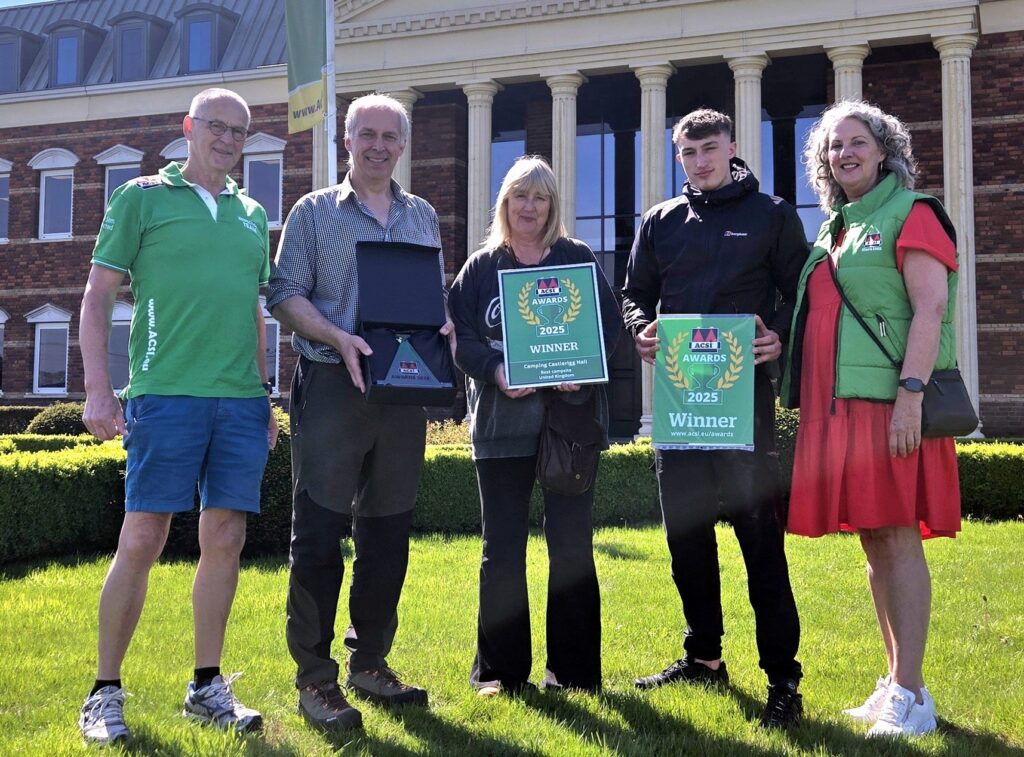
Castlerigg Hall Holiday Park in Keswick has been voted the most popular camping destination in Great Britain by campers from 33 European countries. The accolade comes from the ACSI, Europe’s largest publisher of camping information, which represents more than 9,400 campsites across the continent.

The family-run park, operated by the Jackson family since 1938, topped the poll for its combination of location, quality, and hospitality. David Jackson, who runs the park with his wife Jill and son Josh, said the award was “ a fantastic feather in the park’s cap” and praised his team for their contribution.

Castlerigg Hall offers a range of accommodation, from traditional camping pitches to luxury holiday caravans and touring pitches for motorhomes. The park also features innovative Hex Pods, sustainable glamping units with underfloor heating powered by renewable energy, furnished living areas, and kitchen and bathroom facilities beneath hexagonal glass roofs.

Earlier this year, the park won the 2025 Cumbria Tourism Award for Regenerative Tourism, recognising its commitment to protecting and enhancing the natural environment. Castlerigg Hall is a longstanding member of the Holiday and Residential Parks Association (HARPA).

ABOVE: Outside the Dutch headquarters of the ACSI, David Jackson and his wife Jill and their son Josh receive the organisation's top UK award from two of its senior holiday park inspectors.

EVOLVING FACE OF OUTDOOR LUXURY

Glamping is a Growth Opportunity for Holiday Parks, Caravan Parks & Campsites...

Glamping holidays are undeniably different from any other kind. From treehouses and cabins to yurts, huts and safari tents, each location offers a unique slice of outdoor living.

Each site offers its own unforgettable moments — the delighted laughter of children dashing around the picnic table, the thrill of letting go on a river swing, or the gentle hum of conversation and the soft clink of bottles around a flickering campfire.

For holiday park operators, glamping represents far more than a pretty view or quirky accommodation style — it’s a powerful, profitable evolution of the outdoor leisure market.

THE RISE (AND STAYING POWER) OF GLAMPING
What began as a niche luxury trend has now become a cornerstone of the UK holiday park offering. Glamping has matured into a mainstream, multi-generational travel experience that blends comfort, adventure, and sustainability. In the wake of the pandemic, when travel restrictions reshaped holiday habits, British staycations surged — and glamping was perfectly positioned to meet the demand for safe, nature-rich escapes.

That momentum hasn’t slowed. According to VisitBritain, interest in outdoor accommodation remains high, particularly among younger families and couples who value experience over excess. Glamping is no longer a temporary craze; it’s the new benchmark for outdoor luxury — and a serious business opportunity.

Park owners who once relied solely on touring pitches or static caravans are now finding that glamping units not only attract new audiences but extend the season and strengthen year-round revenue. For many, it’s a diversification strategy that futureproofs their park while elevating guest experience.

It's a powerful, profitable evolution of the outdoor leisure market.

BUSINESS BENEFITS FOR PARK OPERATORS
For those managing or developing holiday parks, the business case for glamping is strong.

Increased Occupancy and Higher Margins:
Glamping units typically command higher nightly rates than traditional camping or touring pitches. Their premium feel justifies the price point, while their comfort and weather resilience mean they’re occupied for longer stretches of the year.

Longer Seasons:
With insulated pods, eco-cabins and heated safari tents, operators can open earlier in spring and stay open later into autumn. All-weather glamping means less reliance on the fickle British summer.

Appeal to New Demographics:
Glamping attracts a broad mix — from young couples seeking weekend getaways to multi-generational families looking for shared experiences. Many guests are first-time campers drawn in by the promise of luxury touches like en-suite bathrooms, hot tubs, and proper beds.

Upselling Opportunities:
Once guests are on site, there’s scope to increase revenue through optional extras — hot tubs, fire pits, outdoor kitchens, spa pods, or guided activities. Glamping lends itself perfectly to personalised experiences.

A Strong Marketing Edge:
Visually striking and social-media-friendly, glamping units make perfect marketing material. Eye-catching imagery of stylish lodges or twinkling nights under canvas resonates across social media and online booking platforms, helping parks stand out in a crowded marketplace. For parks aiming to refresh or reposition their brand, glamping can instantly enhance visual appeal and storytelling power.
MODULAR AND OFF-GRID designs combine sustainability with modern convenience.

TYPES OF GLAMPING UNITS & WHAT’S TRENDING
The modern glamping landscape is wonderfully diverse. Operators can now choose from a wide range of structures to suit their landscape, budget, and guest profile.

Safari Tents & Lodges:
Spacious, durable and visually impressive, safari tents remain one of the most popular choices for parks seeking a balance between luxury and authenticity.

Pods & Shepherd Huts:
Compact and efficient, these offer year-round comfort with minimal maintenance. Perfect for couples’ retreats or smaller sites.

Yurts & Tipis:
These structures deliver a strong connection to nature, ideal for parks promoting wellness or off-grid stays.

Treehouses & Elevated Cabins:
Offering a real wow factor, these premium options can command top-tier rates and create social-media buzz.

Modular & Off-Grid Designs:
The latest trend is flexibility. Many new glamping solutions incorporate solar panels, compost toilets, and rainwater harvesting — appealing to guests who value sustainability.

Luxury Touches:
Modern glamping is about more than quirky shapes — it’s about finish and feel. Think en-suite bathrooms, kitchenettes, underfloor heating, Wi-Fi, and private hot tubs. Guests increasingly expect the comfort of a boutique hotel combined with the adventure of the outdoors.

Design Trends:
Natural materials, earthy tones, and minimalist luxury are shaping the new look of glamping. Operators are investing in aesthetics that blend seamlessly with the landscape, creating “Instagrammable” destinations that double as marketing assets.

EN-SUITE BATHROOMS, KITCHENETTES, and hot tubs are now expected features in premium glamping, photo credit to Canopy & Stars.

Clear Sky Safari Tents Deliver Comfort, Charm, and Strong ROI for Holiday Parks
The UK glamping market continues to thrive, with guests seeking experiences that combine comfort, adventure, and sustainability. Over the past few years, expectations have shifted significantly: visitors now want high-end luxury in outdoor settings — complete with fully furnished interiors, high-quality bathrooms, and reliable, weatherproof accommodation.

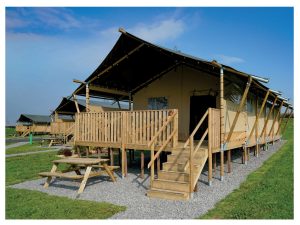
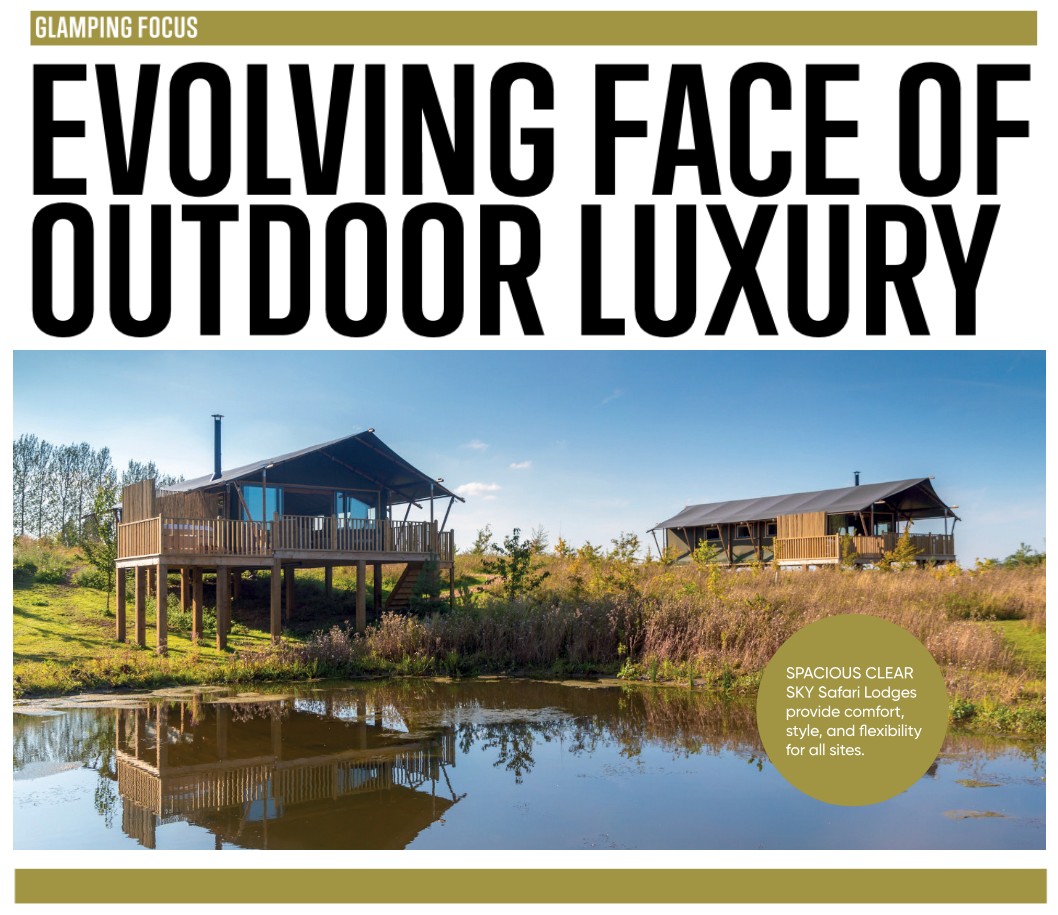
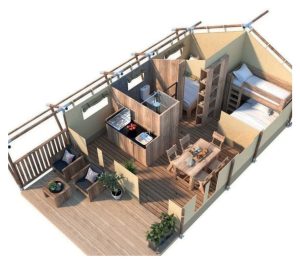
Holiday park operators are responding by investing in durable, stylish Safari Lodges that meet these higher standards while still offering guests an authentic connection with nature. At Clear Sky Safari Tents, the Luxury Canvas Lodge range remains especially popular among UK holiday parks and landowners. These versatile lodges combine charm and comfort with impressive ROI.

Their spacious layouts, flexible configurations and robust build make them an ideal solution for parks looking to broaden their appeal while maintaining operational efficiency. A recent Clear Sky project at Sandringham has demonstrated this success first-hand.

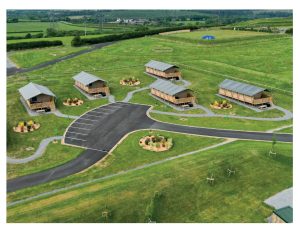
The park introduced 15 Safari Lodges — including DDA-compliant options — to provide a mix of accommodation for families, couples, and accessible stays. Guests have praised the combination of comfort and rural charm, reinforcing the growing demand for premium outdoor experiences.

What sets Clear Sky apart is their end-to-end service — guiding operators through every stage of development, from planning permission to installation. Their expertise ensures that each project is not only visually stunning but commercially sound, helping holiday parks achieve long-term success in the evolving glamping market.

OUTDOOR DECKS AND PRIVATE HOT TUBS offer opportunities for upselling and premium guest experiences.

SUSTAINABILITY & THE ECO APPEAL
For today’s guests, sustainability isn’t a bonus — it’s an expectation. Glamping fits naturally into this ethos, allowing operators to embrace environmentally responsible practices while enhancing guest experience.

From off-grid technologies and solar power to rainwater collection and eco-friendly waste systems, glamping lends itself to green innovation. Many glamping structures are built from sustainable materials and designed to have minimal impact on the landscape. In some cases, they can be removed seasonally, leaving little trace on the land.

Operators are increasingly joining Green Tourism and similar accreditation schemes, using these as selling points for eco-conscious visitors. By adopting circular economy principles — sourcing locally, using renewable energy, and minimising waste — holiday parks can appeal to the growing demographic of travellers who want comfort without compromise.

PODS AND SHEPHERD HUTS offer compact, efficient accommodation with year-round appeal, photo credit to Canopy & Stars.

THE FUTURE OF GLAMPING
As the UK leisure industry continues to evolve, glamping stands out as one of its brightest success stories. Its strength lies in adaptability — the ability to merge luxury with simplicity, and innovation with sustainability.

For park owners and managers, glamping is both a creative and commercial opportunity: a way to reimagine the guest experience, attract new audiences, and generate reliable, repeatable income.

With quality suppliers such as Clear Sky Safari Tents helping operators deliver premium results, the sector is set to remain one of the most exciting growth areas in outdoor hospitality. In 2025 and beyond, glamping isn’t just redefining how people holiday — it’s reshaping how holiday parks thrive.

Clear Sky Safari Tents
Tel: 0333 241 2660
www.safaritentsandlodges.com

Canopy & Stars
www.canopyandstars.com

CHANGING PLACES

CHANGING PLACES

Even the humblest washroom facilities can make or break your brand, advises Becci Knowles...

ADD A TOUCH of character to your washroom facilities to keep the guests happy.

Leading market research firm Mintel says that in a competitive market, with relatively low brand differentiation outside of the leading holiday centre brands, catering for rising visitor expectations in terms of accommodation, facilities and experiences has become vital for success. Clean, modern, accessible, and eco-friendly washrooms have a key role to play in continuing this upward trend.

A quick look at holiday park reviews online at Tripadvisor is testimony to the fact that these facilities feature highly on the list of customer priorities across every demographic. Meeting the rising expectations of existing customers and changing the perception new ones, is vital for a destination’s growth. Park Holidays operates 43 caravan holiday parks across the UK from Cornwall in the West, Suffolk in the East and up to Yorkshire and Scotland in the North.

Commenting on the importance of its washroom facilities across the portfolio, a spokesperson told Holiday Park Scene: “On our parks which provide touring and camping pitches, the washrooms remain one of the single most important factors in shaping guests’ level of satisfaction with their stay.

“On review websites, our facilities will frequently be commended for their cleanliness, standards of maintenance, and overall impression of being a welcoming and hygienic environment for ablutions. “Positive comments on our washrooms also appear on Park Holidays’ Feefo review website and have helped the group achieve the platform’s excellence award for six years in succession.”

SUCCESS MARKERS
Washrooms are pivotal in the success of smaller parks too, particularly where there is a spa element Kevin Jones, resort director at Whalesborough Farm and cottages tells Holiday Park Scene. “Being a health spa and 5* cottages resort, cleanliness and the experience is vital to our business, we pride ourselves on giving the customer the best possible experience they can have while with us,” says Kevin.

He continues: “Businesses are judged by the cleanliness of the facilities and predominantly the washroom facilities, we want our customers to enjoy their time with and a clean, pleasurable place to be starts with the washrooms.” Shaun Matthews is the owner of Blue Hills Touring Park in Truro. He agrees that good quality, clean facilities help to present a professional image of your park.

“Many smaller caravan and camping sites such as our 50 pitches often don’t provide some of the other facilities that are found on larger parks so it essential that those we do provide are as good as they can be. They will be one of the main facilities that a park is judged upon. “The main requirement that guests are looking for, regardless of shape/ size washroom facility that’s provided is cleanliness, this seems to be the number one priority and is never going to change.

“Washroom facilities have been moving more and more “posh”, underfloor heating, heated and backlit mirrors, background music. In some case there has been a move to provide facilities that are more akin to a hotel, although this is still the preserve of the much higher end parks.”

AS DERBYSHIRE’S NEWHAVEN HOLIDAY PARK SHOWS, thoughtful design can make all the difference to washroom appeal Pic. Park Holidays UK

LOCATION, LOCATION
Emma Bateman is the site manager of Lincolnshire based holiday park, Westwood Lakes. Specialising in fishing holidays, it has seven lakes open to guests and the public. As fishing is an outdoor sport, and the lakes are sometimes a distance from the main buildings, the park has built its own toilet facilities around the lakes, which staff clean daily. The company also hires portaloos, via an external provider, for the lakes that cannot be reached by the water and drainage system.

Emma says: “Over the 16 years we have been operating, we have tried to update our facilities as we see fit. For example, the outdoor permanent toilet blocks are a recent addition to the site after fisherman complained the café and bar toilets were too far away from the lakes. “In addition, we have recently updated our hand driers to the Dyson air model, and we find they are much more efficient at drying hands and that means less paper is used too.”

Onsite facilities include both a café and bar with washroom facilities, including disabled toilets and baby changing units. Emma adds: “Having these extra facilities means we can accommodate all visitors; inclusion is important to us at Westwood Lakes, and this is reflected in our facilities having ramp access etc, to improve visitor experience.” Mayfield Park is a family-owned and run camping, caravan and residential park nestled in the hills on the outskirts of the famous market town of Cirencester.

Picking up on Emma’s point about access and inclusion, managing director Carl Upton agrees that the location of your washrooms, is key: “When planning on new toilet blocks it’s always good to keep them near the camp site and not miles away or in a muddy field and to have easy access for disabled users,” he says. Had the team at Westwood Lakes foreseen just how much how much the park would grow in the 16 years since its inception, Emma says they would have planned their washroom facilities differently: “For example, the outdoor permanent toilet blocks would have been built much earlier and we would have used part of the accommodation plumbing and drainage systems to be able to reach the further afield lakes instead of portaloos, which is an extra monthly expense.”

“Washroom location is everything,” says Blue Hills Touring Park’s Shaun Matthews. “So not too far from the furthest pitches but equally close enough to services to reduce installation costs.” He also points to ease of operation. “Are they user friendly, can some facilities remain open whilst others are closed for cleaning,” Sean asks. “Don’t underestimate the number of cubicles/ showers required, make sure that guests are well catered for and won’t have to queue for their morning shower. “Accessible and family bathroom facilities should also be provided. Can you integrate other facilities into the same building, for example, wash up areas.”

WITH THEIR HIGH VOLUME OF USERS, washrooms at Chichester Lakeside Holiday Park are scheduled for regular monitoring visits throughout the day. Pic. Park Holidays UK

ECO ESSENTIALS
Back at Whalesborough Farm and Cottages, resort director Kevin is keen to stress the importance of sustainability: “Parks should always consider sustainability, from thinking how we heat our washrooms to the water we use in them,” he says, adding: “We use water from our own bore hole and air source heating powered by our turbine on site.” Blue Hills Touring Park’s Shaun Matthews suggests using recycled and environmentally friendly cleaning products.

“If you can easily manage the cleaning maintenance through good design then you are part of the way to sustainability. “In addition, sustainability can be achieved through the installation of renewables such solar thermal, air source/ground source heat pumps and so on.” Achieving a more sustainable business model, especially in the current economic climate, remains a challenge for many parks.

Emma again: “We have to think of what is friendly and cost effective; we are becoming more aware of the environmental damage and we can make a difference with better quality hand driers, environmentally friendly toilet rolls and tissues. “Sadly, this doesn’t always equal cost effective, and that is something we are trying to balance here at Westwood Lakes,” she adds.

Looking to the future, Shaun says: “Washrooms will become more upmarket as guests demand a better experience. “Probably more eco-friendly, it’s quite likely that more operators will also move towards unisex facilities. This will help to reduce the number of cubicles required and reduce costs as utility bills continue to grow.” Picking up on this point, Whalesborough’s Kevin Jones says: “Washrooms of the future will be clean, vibrant, multi-generational, filled with cloud-based technologies, a zero emissions bathroom removes the feeling of guilt when using natural resources and energy.

“It will allow us to take a shower several times a day without placing a burden on the environment. “Designed as a small power station, the bathroom functions as a heat recuperator and water treatment facility, for example by converting waste materials into methane which is then used to generate heat.” While the development of washroom technologies continues to gather pace and the exact future of them remains to be seen, what is clear is that parks looking update their existing facilities or install new ones have an ever-widening range of products and services to choose from.

CARRY ON GLAMPING

CARRY ON GLAMPING

Eco-credentials and a unique experience are top of the list when it comes to maintaining that all-important occupancy rate, reports Judith Wojtowicz


PEACE AND TRANQUILLITY in the Malvern Hills, a project developed by The Rural Planning Co


Getting up close and personal with a llama might not be everyone’s idea of a perfect holiday break. But at Glamping with Llamas on the border of Norfolk and Cambridgeshire, it is the ultimate in experiential glamping. The clue is in the name… a herd of ‘off duty’ grazing llamas are well used to visitors walking among them.

At 6pm each day, in the words of Tina Gambell, they are ‘on duty’ as she and husband Chris feed, groom and demonstrate how to handle them, sharing with visitors keen to learn more about these gentle creatures. The couple set up their business after realising their paddock pets had potential to offer a unique visitor experience.

“The difference here is that we encourage our guests to walk among the llamas and interact with them where similar sites seem to keep their animals behind a fence,” said Tina. One of their llamas acted as ring bearer for a summer wedding… a truly immersive and unique experience.


A WOOD-BURNING STOVE at the heart of this well-appointed safari tent is ideal for chilly nights at Meadowfield


SELLING POINTS
“The market is becoming saturated but for sites with a genuine usp, even those who are watching their pennies, will return if they enjoyed a memorable and unique experience,” added Tina, who is developing their wedding offering for the coming year. The word ‘experience’ is cropping up more and more as market growth slows, having seen an explosion of interest during the pandemic as people sought ‘outside’ holiday options.

While some pop-up sites and less-well managed businesses have since vanished, there is still much to choose from, be it a £60 per night cabin with shared shower block or high-end glamour from £200 upwards. In the absence of definitive data, anecdotal evidence seems to indicate glamour alone is no longer enough. Among the fast-growing millennial crowd, priorities include an eco-friendly offering combined with glorious setting and 5-star plus luxury… picture perfect for Instagram.


They want quirky en suite accommodation, think treehouse, geodome, gypsy caravan, stargazer tent, yurt, exotic tipi or converted vintage vehicles, with added value such as spa, wellness activities, nature trails and even the services of a top-class professional chef. Green tourism is a big trend with all ages, as people actively seek a glampsite that embraces sustainability, reducing their carbon footprint and getting close to nature.

One such is Brownscombe Luxury Glamping in Devon whose far-ranging sustainability policy has seen it win the Green Tourism Gold Award three years running. Its commitments include using third-party suppliers who follow similar principles such as the local laundry that has invested in biomass and solar technologies to minimise their impact on the environment, not to mention a water borehole.


SUNRISE: There’s glamping and then there’s Glamping with Llamas.


A fine example of a circular economy designed to reduce waste and protect the environment. Sarah Riley, founder of The Glamping Academy helps would-be hosts around the world to design their dream eco-accommodation. She told us: “Only ten years ago a bell tent in a field was enough of an attraction because it was seen as new and different.

Today, as well as a wonderful location and amazing interiors a successful business needs to maximise the guest experience.” All those things can be found at The Little Shire in Somerset, whimsical hobbit houses built partly underground… fit for hobbits and humans, says Adelle Hobbs, who added glamping to an established commercial operation within a converted dairy farm.

A selection of independent shops and eateries, plus black-nosed valois sheep and friendly alpacas make for a memorable setting. There is even a hobbit playhouse for children.


UP CLOSE and personal with Ria the llama.


COSY AND WARM
The houses are fully insulated with underfloor heating. While this makes them cosy and warm enabling year-round occupancy, they are energy hungry which is cause for concern amid rising costs. Fresh water comes from a borehole and the site has its own waste system.

Having welcomed her first visitors in May last year, after a four-year planning process interrupted by the pandemic, Adelle was fully booked very quickly and is anxious not to lose that momentum. Marketing is an ongoing challenge a role she has now passed on to a professional agency to relieve her of the ‘mind-boggling stress’ that kept her awake at night worrying about the online booking system and social media.


“I am great with people, and I love this lifestyle, but the key thing when starting out is to treat it as a journey of self-discovery, she said. “Learn what you can and can’t do and accept advice and help whether it be technical, practical physical tasks or the all-important planning stage.” In contrast, Meadowfield Luxury Glamping in Warwickshire is part of a working arable farm offering a ‘hands on’ experience to guests who stay in luxuriously appointed safari tents.

Their farm tour, by third generation farmer David Mold, is an education for all ages, especially children who have never seen a combine harvester or those who have no idea where food comes from. His wife, Jules, who was a panellist at The Glamping Show recently, has turned a four-acre meadow, seeded with wildflowers as part of an environmental project, into a thriving glampsite running between April and October.


THIS LOTUS BELLE STARGAZER Tent sleeps 10 in a one-acre paddock at Glamping with Llamas


“The site is set just off the yard, so guests are close to nature while also getting a close-up view of farm life,” said Jules. Her advice to newbies, as she explained at the show, is to do their homework and take the time to research and draw up a viable plan. And she adds a health warning: “Unless your heart is really set on it, my advice is to think twice,” she said.

“You will spend more, and work harder than you ever imagined although positive feedback is so rewarding and makes the effort worthwhile.” Diversification of this kind was one of the market drivers before Covid, farmers and landowners able to access grant funding from government and other sources to support and enhance rural life.

While this is still the case, there are signs landowners are now partnering with outside investors to monetise the opportunities. They recognise the potential for good return and see glamping as a short-to-medium term project, incorporating an exit strategy into a five-year business plan.


PHEW… it’s hot here! Llamas seek the shade on a hot summer’s day


CHANGING TRENDS
As the market evolves, this is one of the changing trends noted by The Rural Planning Co, former land agents who specialise in working with new operators. Sophie Blandford, business development and marketing manager, told us: “Ahead of Covid there was real buoyancy and excitement in the market and while that pace has slowed, 2021 was a fantastically successful year because of the ongoing uncertainty of overseas travel which boosted the ‘staycation’.

“The staycation market looks set to stay although popular coastal areas and areas of outstanding natural beauty are becoming saturated. When it comes to applying for planning permission, many local authorities will be keen to capitalise on the tourist pound. The consumer will vote with their feet in a crowded market so providing options in less obvious places is probably where the best opportunity lies at the current time.”


Hotels, holiday and caravan parks and even historic houses are getting in on the act, likely to generate even more competition in the future as they have their own traditional audience and are located away from the hustle and bustle of those saturated areas. “On the positive side, there is plenty of room for creativity and good return on investment, as long as the proposal is based on sound planning and in-depth research.” added Sophie.