WISH YOU WERE HERE – South Lytchett Manor Caravan & Camping Park

South Lytchett Manor Caravan and Camping Park

This is one of Dorset’s most cherished holiday destinations, and it’s easy to see why. Owned and warmly run by the Bridgen family since 2007, the park blends award-winning facilities with genuine hospitality, all set within the peaceful grounds of a historic Georgian manor.

Its welcoming atmosphere, beautifully landscaped setting, and exceptional customer service have earned it a long list of accolades—most notably AA Campsite of the Year 2021–22 and multiple Visit England awards.

The park offers an impressive range of accommodation, making it ideal for campers, caravanners, motorhome owners, and glamping enthusiasts alike. Guests can choose from superior and deluxe hardstanding pitches, fully serviced options, large grass super-electric pitches, or simple non-electric grass spots.

For something different, thirty bespoke glamping units—ranging from handcrafted Romany caravans and shepherd’s huts to stylish pods, bell tents, and star-gazing yurts—provide a cosy, characterful alternative to traditional camping. Facilities are among the best in the region, with Diamond Loo of the Year Award amenities, free Wi-Fi, a well-stocked shop, café, seasonal bar, laundry, dog wash, and even a breakfast butty van.

MEGAN ASPDEN (Bridgen), Jamie Aspden and Victoria Bennett, collecting Gold for Best Customer Services at the BCP Tourism Awards.

Families appreciate the playpark and visiting food vans, while dog owners love the dedicated 2.5-acre off-lead field. A bus stop just outside the gates makes exploring car-free incredibly easy. Location is another of the park’s strengths. Just three miles from Poole and within easy reach of Bournemouth’s beaches and iconic Jurassic Coast landmarks such as Durdle Door, Lulworth Cove, and Kimmeridge, it’s a superb base for sightseeing.

Top attractions including Monkey World, The Tank Museum, Corfe Castle, and Brownsea Island are all within a short drive. Sustainability is also part of the park’s ethos, with recycling across the site, bike hire, wildlife-friendly areas like the wildflower meadow and duck pond, and fun touches such as “Buggingham Palace,” their impressive bug hotel. What truly sets South Lytchett Manor apart, though, is its warmth, charm, and attention to detail.

From the ornate blacksmith-crafted entrance gates to the friendly team who treat guests like family, the park offers an experience that keeps visitors returning year after year.

South Lytchett Manor Caravan and Camping Park
01202 622577
info@southlytchettmanor.co.uk
www.southlytchettmanor.co.uk

HARPA WELCOMES MORE NEW MEMBERS TO STRENGTHEN ITS CAMPAIGNS

WITH HARPA’S MEMBERSHIP continuing to grow, Director General Debbie Walker welcomed a record number of delegates to the association’s annual conference in Westminster this year.

The Holiday and Residential Parks Association reports a steady growth in its membership base this year, reinforcing HARPA’s position as the industry’s largest and most dynamic representative body. Now championing more than 3,000 park enterprises across the UK, the Association is using its mandate from members to lobby across a broad range of issues affecting their businesses.

In recent months, HARPA has voiced to Government the industry’s strong opposition to the so-called “tourism tax” – and seen its opposition to the proposals widely reported in national and regional media. The Association has also sparked debate in Westminster and beyond about the costs and extra admin demands imposed on parks when arranging the movement of abnormal loads.

And across many other matters affecting the ability of parks to achieve their business ambitions – from planning reforms to fairer rates and taxation policies – HARPA engages in active and constructive dialogue with decision-makers about how change can support a sector delivering important economic and social benefits right across the country.

The association is assisted in this work by the success of its Parks Make Places campaign, which highlights how communities across Britain are strengthened by the presence of park businesses. Our case studies show specific examples of how parks generate tourism income, create employment, and enable local people, charities and other community bodies to share in their success.

A recent independent YouGov poll of MPs found that 76% now recognise the social value that holiday and residential parks brings to rural and coastal areas. HARPA is now reinforcing this message through its relationships with new senior Government figures, including the ministers and cabinet members who will be shaping future policies impacting on the parks industry.

HARPA members gain more than becoming part of a strong and influential body leading the way forward for our sector. They also enjoy hands-on support ranging from training programmes and webinars to conferences, a telephone helpline and specialist advice – plus HARPA’s regional branch network where fellow-members have, for more than 75 years, supported each other to reach their goals.

HARPA
01452 526911
www.harpa.org.uk

KEEPING POOL HEATING COSTS UNDER CONTROL WITHOUT COMPROMISING GUEST COMFORT

Why intelligent heat pump technology is helping holiday parks reduce energy costs while maintaining perfect swimming conditions…

For holiday parks, caravan parks, camping and glamping sites, the swimming pool is often one of the biggest attractions—and one of the largest consumers of energy. Rising utility costs and increasing environmental expectations mean operators are looking for smarter ways to heat their pools without sacrificing guest experience. We spoke to Julien Galot, Head of Sales at Poolstar Group, about how modern heat pump technology is helping leisure businesses improve efficiency while keeping pools at the perfect temperature.

What are the biggest challenges holiday parks face when it comes to pool heating?
Julien Galot: The biggest challenge is balancing guest comfort with operating costs. Guests expect a consistently warm, inviting pool throughout the season, but owners also need to keep energy bills under control. Today’s heat pump technology makes that possible by automatically adjusting output to match demand, ensuring energy is only used when it’s needed.

How does the Megaline Fi differ from a standard pool heat pump?
The Megaline Fi has been designed specifically for larger commercial pools where reliability and efficiency are essential. Its Full Inverter technology, combined with Mitsubishi dual rotary compressors, depending on the pool’s heating requirements. Rather than operating at full power all the time, it works more intelligently, reducing electricity consumption while maintaining stable water temperatures. The unit also features a robust stainless-steel construction with a galvanised steel casing, making it well suited to demanding commercial environments.

How important is remote monitoring for holiday parks?
Increasingly important. Park managers are responsible for multiple facilities, so being able to monitor pool heating remotely saves both time and money. The Megaline Fi includes a large touchscreen interface for on-site control and can also be managed remotely using the Poolex app. Through Poolex Cloud, operators can monitor performance, adjust settings, identify potential issues before they become problems and optimise efficiency throughout the season.

Is installation disruptive?
Careful planning is always the key. Every holiday park is different, so installations are designed around existing plant rooms and operating schedules to minimise disruption. With good preparation, equipment can often be installed with very little impact on guests or day-to-day operations.

Beyond lower energy bills, what benefits can operators expect?
Energy savings are usually the first thing customers notice, but there are wider benefits too. More consistent pool temperatures improve the guest experience, while intelligent controls reduce maintenance demands and help maximise the lifespan of the equipment. For holiday parks looking to invest in long-term sustainability, lower energy consumption also contributes towards reducing their overall carbon footprint.

Is this technology suitable for all types of parks?
Absolutely. Whether it’s a holiday park, caravan park, camping or glamping site, any business operating a commercial swimming pool can benefit from modern inverter heat pump technology. The important thing is selecting equipment that’s correctly sized for the pool and understanding the total cost of ownership, rather than focusing solely on the initial purchase price.

Looking ahead, where do you see the market going?
We’re seeing operators place far greater emphasis on energy efficiency and smarter facility management. Connected equipment that can be monitored remotely, optimised automatically and integrated into wider energy management strategies is becoming the new standard. For holiday parks, investing in efficient heating technology is no longer simply about reducing costs—it’s about future-proofing the business while delivering the level of comfort today’s guests expect.

For more information please visit www.poolstar.fr/en or www. automatedenvironmentalsystems.co.uk

POWERING SMARTER DECISIONS

For many holiday parks, planning for the next season begins long before the current one has finished. As operators start reviewing budgets, maintenance schedules and infrastructure requirements for 2027, utilities are becoming an increasingly important part of those conversations. Electricity usage across holiday parks continues to evolve.

Modern caravans and lodges consume more energy than they once did, guests are travelling with more services, and electric vehicle charging is creating new demands on site infrastructure. At the same time, many parks still rely on periodic meter readings or inclusive pricing models that can make it difficult to understand exactly how electricity is being used across a site.

This is prompting some operators to take a closer look at utility management and the information available to them. The discussion is often less about billing and more about visibility. Understanding where energy is being consumed, identifying unusual usage patterns and having access to accurate data can help inform day-to-day operations as well as longer-term planning decisions.

For parks considering future infrastructure improvements, reviewing utility management earlier in the planning process can also provide greater flexibility. It allows time to assess options, understand site requirements and incorporate any changes into wider development plans.

Earlier planning can also help operators schedule projects around quieter operational periods and take advantage of favourable site conditions, rather than working within the tighter timeframes that often arise later in the year when weather, shorter daylight hours and contractor availability can become less predictable.

While no operator can predict future energy costs, having a clearer picture of consumption can make it easier to plan with confidence. As preparations for the 2027 season begin, many parks are finding that better visibility into utilities is becoming an important part of understanding how their sites operate today — and how they may need to evolve in the future.

Metpow
info@metpow.com
www.metpow.com


IS YOUR HOLIDAY PARK INSURANCE KEEPING PACE WITH YOUR BUSINESS?

By Kevin Minnear, Head of Underwriting, Compass Insurance...

The caravan and holiday park sector is facing a rapidly shifting risk landscape. Renewing insurance on the same basis as previous years is no longer viable. In today’s market, it is a recipe for significant financial shortfall.

THE CLAIMS LANDSCAPE
Successful claims are increasingly dependent on meticulous documentation, not simply the occurrence of an insured event. Insurers now expect up-to-date maintenance logs, drainage records, and professional arboricultural surveys.

Parks that can demonstrate scheduled maintenance programmes tend to achieve better outcomes; those relying on informal checks may face difficult liability disputes. The most common reason for a reduced or unsuccessful claim is underinsurance, triggering the average clause, which can see your payout reduced or, in serious cases, withheld entirely.

AVOIDING THE UNDERINSURANCE TRAP
If your policy figures are a few years old, you are almost certainly underinsured. New assets to declare and accurately value include EV charging infrastructure, outdoor experience areas such as fire pits and pizza ovens, and underground services including pipes, cables, and fibre-optic Wi-Fi.

The Royal Institution of Chartered Surveyors (RICS) estimates rebuild costs rise by 3% to 7% annually, making a review at every renewal essential. Emerging risks to address include coastal erosion and flash flooding, cyber threats from digital bookings and automated gate access (which may not trigger cover if your policy requires physical damage), and fluctuating seasonal stock levels, which should be insured at their peak, not their lowest.

MATCHING COVER TO MODERN OPERATIONS
With dog-friendly holidays now mainstream, animal incidents have become an increased liability risk. Clear rules, designated exercise areas, and documented incident records are essential.

Parks should also clarify where their liability ends and a private unit owner’s begins, and consider requiring private owners to provide annual proof of insurance.

THE DANGERS OF RENEWAL INERTIA
A recent report by the Association of British Insurers (ABI) report found that almost half of SME decision-makers had not reviewed their cover in the previous 12 months. Key areas to address:

• Indemnity periods. A standard 12-month business interruption period is rarely sufficient for holiday parks. Extending to 24, 36, or 48 months is worth exploring and often more affordable than expected.
• Rebuild vs market value. Your insurer needs reinstatement cost, including architects’ fees, site clearance, and compliance with current regulations, not market value.
• Policy conditions. Missing a stipulated alarm type or electrical inspection (EICR) could void your cover entirely.

Commission a professional reinstatement cost assessment, stress-test your business interruption cover, and audit your site with fresh eyes. The insurance market is not punishing holiday parks; it is demanding greater clarity and higher standards of risk management.

Compass Insurance
0344 274 0276
compassparks.co.uk

Opinions expressed in this article are that of Compass, based on our expert view of the market dynamics, unless specific additional source(s) is/are listed.

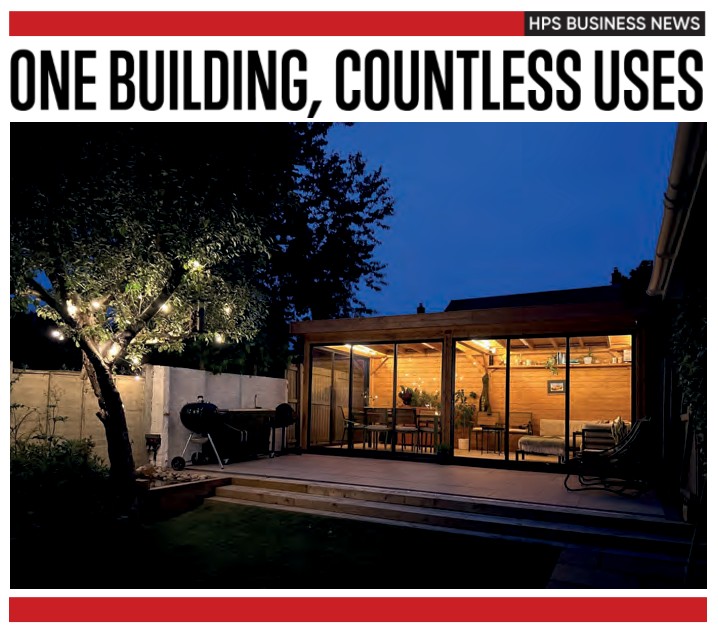
ONE BUILDING, COUNTLESS USES

How Palmako Connect is helping holiday parks create flexible, revenue-generating spaces that evolve with their business...

A bar, outdoor kitchen, kiosk, guest lounge, wellness retreat, gym, reception point or covered social hub. Traditionally, each would require a different building. Palmako Connect takes a smarter approach. Built around a modular 3m x 3m format, Connect enables holiday park operators to create spaces tailored to their site and business needs.

Individual modules can be used independently or combined into larger configurations, making it easy to start small and expand as requirements evolve. To simplify the planning process even further, Palmako is introducing a new 3D configurator, allowing customers to design their own Connect building online.

Users can experiment with layouts, dimensions, roof styles, glazing options and module combinations to create a structure that meets their exact requirements before speaking with the Palmako team. Connect can be configured in countless ways, with options including open or enclosed layouts, bar corners, kiosk serving hatches, louvre privacy screens, full wall panels and three-panel sliding doors.

Available with either 28mm or 44mm wall construction, double glazing and a choice of flat or pyramid roof designs, the range can be adapted to suit everything from outdoor bars and kitchens to wellness facilities and guest lounges.

The flexibility of the concept has already inspired a wide variety of projects. Holiday park operators have used Connect buildings as bars, kiosks, outdoor kitchens, wellness facilities and guest lounges, while others have created compact gyms and fitness studios. The beauty of the system lies in its ability to adapt to changing needs and maximise the use of available space.

The appeal extends beyond the holiday park sector. Professional rally driver Elfyn Evans selected a flat-roof Connect building as part of his own outdoor leisure space. Set against a stunning backdrop, the project demonstrates how Connect can create attractive, functional environments that blend seamlessly into their surroundings.

For holiday parks, flexibility has never been more important. Guest expectations continue to evolve, new revenue opportunities emerge and facilities are increasingly expected to serve multiple purposes throughout the season. Rather than investing in a building with a single function, operators can create adaptable spaces that evolve alongside their business.

Palmako Connect offers a simple proposition: one modular building system with almost limitless possibilities. Palmako is one of Europe’s leading manufacturers of timber structures, supplying holiday parks with accommodation, wellness and outdoor living solutions designed to enhance guest experiences and deliver long-term commercial value.

PALMAKO
01698 426444
www.palmako.co.uk

SOUNDING THE ALARM

Raising the Standard for Fire Safety in the Caravan and Leisure Park Sector...

Fire safety within the caravan and leisure park industry has never been more critical. As modern caravans evolve in design, comfort and functionality, the need for robust, reliable fire detection systems has become a non-negotiable standard.

Hispec has been working alongside the majority of leading UK manufacturers and securing over 75% market share in smoke and heat alarm supply firmly positioning the brand as a market leader in this specialist sector. Caravans present a unique fire risk.

Their compact layouts, combined with the proximity of cooking appliances, heating systems and electrical installations, mean that fire can spread rapidly. In such environments, early detection is essential. This is why compliance with recognised safety standards such as BS EN 14604 and BS 5839-6 is not just a regulatory requirement, but a critical life-saving measure.

These standards ensure that alarms deliver consistent detection performance, clear audible warnings and dependable operation in real-world conditions. Hispec has built its reputation by not only meeting these standards but by championing best practice across the industry. One of the most important advancements in caravan fire safety is the requirement for mains powered smoke alarms with sealed 10 year battery backup.

During prolonged unoccupied periods in caravans and holiday homes of more than 7 days it is essential for maintaining the longevity of the alarm, that the alarm head is removed from its mounting plate. It is common during unoccupied periods that the power to the caravan is switched off which can cause the alarm to emit a low battery warning beep and will reduce its overall service life.

Removing the alarm head disengages the alarm battery enabling it to remain at optimised condition when it is eventually returned to its mounting plate and the caravan becomes occupied again. The importance of battery backup cannot be overstated. Caravans frequently experience power interruptions when disconnected from hook up points or during system faults.

Without a reliable secondary power source, occupants could be left unprotected at the most critical moment. Hispec’s integrated 10 year lithium battery solutions eliminate this risk, while also reducing user error by removing the need for frequent battery replacements and preventing tampering. Beyond installation, Hispec continues to advocate for ongoing safety responsibility.

Even the most advanced alarm system must be regularly tested to ensure it remains fully operational. Weekly testing or checks prior to occupancy are simple yet essential steps that can make the difference in an emergency. Additionally, keeping alarms clean, unobstructed, and replacing units at the end of their service life, after 10 years ensures continued compliance and performance.

Importantly, Hispec’s approach is not about compliance alone, but about delivering long term confidence to manufacturers, site operators and caravan owners alike. With minimal maintenance requirements and systems designed for durability, Hispec solutions offer both practicality and peace of mind.

As the caravan and leisure park sector continues to grow, expectations around safety will only increase. Hispec remains committed to leading this progress through innovation, rigorous testing, and an unwavering focus on protecting lives.

Hispec
T: 01257 262197
www.hispec.co.uk